
Building a 72-Hour Emergency Plan Your Family Will Actually Use
A one-page plan covering meeting points, contacts, roles and supplies — the boring document that makes every other preparation work.
How it works, step by step
Why a written plan beats
Why a written plan beats a good memory
Why a written plan beats a good memory
Most households can list roughly what they'd grab in an emergency, but under real stress — smoke alarm going, phone dying, kids asking questions — that mental list falls apart. A 72-hour plan is a short written document that removes decisions from the moment they're hardest to make. It's not a bunker inventory; it's a bridge across the time it typically takes for utilities, roads or emergency services to get back to normal after a storm, flood, quake or major outage.
Seventy-two hours is a planning convention, not a guarantee. Some events resolve in hours, others drag on for a week or more. Treat the plan as a floor, not a ceiling.
Quick facts
When this is the right approach
Build this plan if you live somewhere with any realistic chance of storms, flooding, wildfire, extended power cuts or regional infrastructure failure — which is most places. It matters most for households with children, elderly relatives, pets or anyone on regular medication. It's less urgent, though still useful, for a single adult with flexible means and no dependents.
When it isn't enough
A written plan doesn't replace physical supplies, and it can't cover every disaster type equally — a plan built around a power cut looks different from one built around a wildfire evacuation. Don't treat it as finished once written; an unused, unpracticed plan is only marginally better than no plan.
Building the plan
- 01
List every household member and their needs. Names, ages, medications, mobility issues, and any equipment (inhalers, hearing aids, mobility aids) that can't be replaced quickly.
- 01
Pick two meeting points. One near home for a sudden local event, one further out in case the neighbourhood itself is inaccessible. Write the actual addresses, not "the usual spot."
- 01
Choose an out-of-area contact. Local phone networks can jam during regional disasters even when long-distance calls go through; a relative in another city or country can relay messages between family members.
- 01
Assign roles. Who grabs the documents folder, who gets the pets, who collects the youngest child from school if parents are separated when it happens.
- 01
List your 72 hours of supplies by category. Water, food, medication, sanitation, light, communication, cash — a checklist, not the items themselves.
- 01
Print it and store three copies. One at home, one in a car or bag, one with the out-of-area contact. Do not rely solely on a phone that might be dead or lost.
Why this order matters
The sequence follows decision priority under stress: people first, then how they'll find each other, then who does what, then what they'll carry. Plans written item-first (starting with a gear list) tend to skip the coordination steps that actually prevent panic and separation, which is where most real harm during evacuations happens — not lack of gear.
Common mistakes
Writing the plan once and never updating it is the biggest one — phone numbers change, medications change, kids grow out of car seats. Storing the only copy on a phone is another; if the phone is dead, lost or the network is down, the plan is useless exactly when needed. Overloading the plan with gear lists instead of decisions is a third — see what belongs in a 72-hour bag for the supplies side, and keep this document focused on people and coordination.
Alternatives and scaling down
If a full written plan feels like too much to start, begin with just the out-of-area contact and the two meeting points — that alone solves the worst-case scenario of a scattered family unable to find each other. Add categories over time rather than trying to finish it in one sitting.
What this cannot do
A plan cannot predict which disaster will happen, replace practical skills like comms when networks fail, or guarantee cooperation from panicked people in the moment. It also can't replace the physical grab-list for a fast exit — pair it with an evacuation checklist for that.
Common questions
How often should we update it? Every time a phone number, medication, school or car seat changes, and otherwise do a five-minute review twice a year.
Should kids see the plan? Age-appropriate versions help. A child who knows the meeting point and one adult's phone number by heart is safer than one who doesn't.
Do we need one plan or several? One core document is enough, with brief notes for the two or three disaster types most likely where you live.
Sources and further reading
Ready.gov family emergency planning Norwegian directorate for civil protection, household preparedness
Gear you need for this hack
Everything below does the job in this guide. Improvise where you can — buy where it matters.
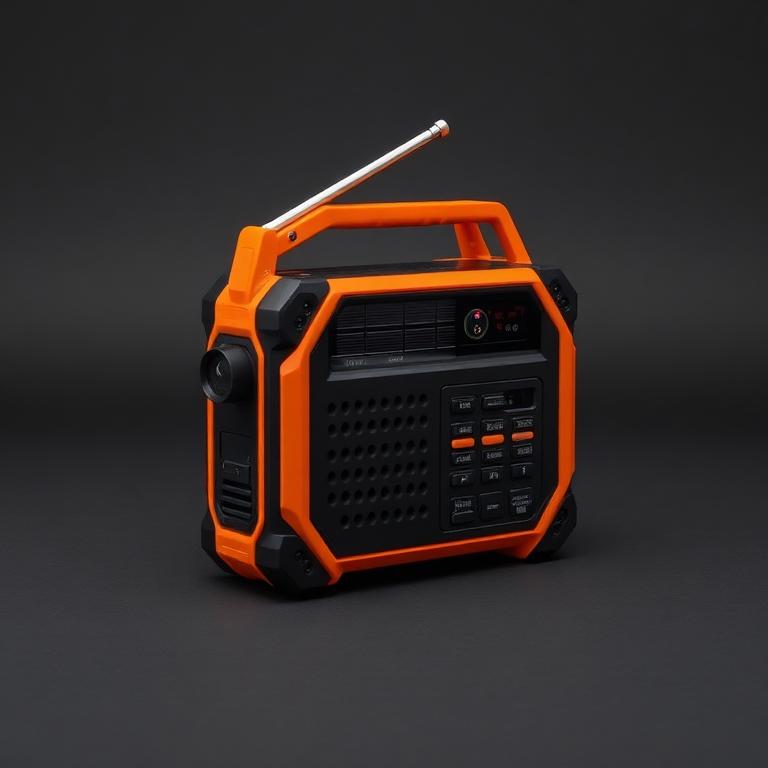
Solar & Hand-Crank Emergency Radio
Midland
Official information when data and TV are down.
AM/FM/NOAA weather radio with solar panel, hand crank, built-in flashlight and USB output for topping up a phone.

Rechargeable Headlamp
Petzl
One per person, stored where the plan says they are.
Hands-free light with a red mode that keeps your night vision.

Food-Grade Buckets with Lids
Simple, rotated water and food storage sized to your plan.
20 litre food-safe buckets: the body of a gravity filter, a root cellar or a rain barrel.
Some links are affiliate links: if you buy through them we earn a small commission at no extra cost to you. We don't run product tests, and a commission never decides what a guide recommends.
Rate this hack
Be the first to rate this hack
Share your experience
Have you tried this hack? Share your experience, results, tips or suggestions with other readers.
Community experiences
Loading…
More Emergency
Staying in Contact When Networks Fail
Radio, SMS, out-of-area contacts and low-tech signals — a layered plan for staying in touch when the mobile network is congested or gone.
7 min read
Evacuating in 15 Minutes: The Grab List
A printed, prioritised list that gets your family, documents, medication and pets out of the door without a single decision made in panic.
7 min read
A First-Aid Kit That Handles Real Injuries
Skip the box of plasters. What actually belongs in a kit for bleeding, burns, sprains and the days when a doctor is not coming.
8 min read