Build Your Own Off-Grid Family Communication Network
How to stay in contact with family and friends when mobile networks and the internet go down — a simple, legal backup plan built on paper first and radios second.
How it works, step by step
Everyone puts their phone in airplane
Everyone puts their phone in airplane mode. Leave one phone working for genuine emergencies.
What happens when the phones stop working
Mobile networks rarely fail in one dramatic moment. What usually happens is more mundane: a storm knocks out power across a district, the masts run on backup batteries for a few hours, and in the meantime every person in the area is calling at once. Calls fail, texts crawl, and the family group chat goes quiet. Add a few realistic variations — one parent still at work, a teenager at a friend's house, someone camping outside coverage — and a household that has no agreed backup is left guessing.
A family communication network is the answer to a narrow question: if we can't call or message each other, how do we still exchange short pieces of information and end up in the same place? It is mostly paper and agreement, with a small amount of equipment behind it.
Quick facts
Build the plan before you buy anything
The plan is the part that keeps working when the equipment doesn't. Six decisions cover most situations, and none of them need hardware:
- 01
Pick a primary and a backup channel. On radios, that is two specific channel numbers agreed in advance — not "we'll find each other". Off radio, it means a primary method (text) and a backup (a call to an out-of-area relay).
- 01
Give everyone a short call sign. Family nicknames are fine. Radio is not private, so use something that identifies the person to your family without broadcasting a full name, address or age to anyone within range.
- 01
Set fixed check-in times. Radios drain batteries when they are left on all day. Agreeing "we listen on channel X at the top of every even hour for five minutes" means the batteries survive several days instead of one.
- 01
Name two meeting points. One near home, one further out in a different direction, in case the first is unreachable or unsafe.
- 01
Choose an out-of-area contact. A relative or friend in another region who everyone can call or text. Local circuits jam before long-distance ones do, and one distant person collecting "I'm fine, I'm at X" messages beats six people trying to reach each other.
- 01
Print it. Wallet cards for adults, a copy in each bag, one on the fridge, one in the car. A plan stored only in a phone disappears with the phone.
You can fill in every field on our printable family communication plan and hand a copy to each person.
Level 1: around the house, campsite or street
At this range you want licence-free handheld radios — the type sold in pairs in outdoor and hardware shops. The service they use depends on where you are: PMR446 across most of Europe, FRS in the United States and Canada, UHF CB in Australia, and other arrangements elsewhere. Do not assume a radio bought in one country is legal to transmit with in another. Power limits and permitted channels differ, and some models sold online are configured for a market you are not in.
Realistic expectations matter more than the box does. A licence-free handheld with a fixed antenna will usually manage a few hundred metres inside a built-up area and one to three kilometres across open ground with clear line of sight. Advertised ranges of "16 km" assume hilltop to hilltop with nothing in between. Inside a concrete apartment block you may not reach the floor above.
What this level actually covers well: keeping in contact across a campsite or property, coordinating a neighbourhood check on elderly residents, staying in touch with someone walking to the shop while the power is out, or keeping two vehicles in convoy talking to each other.
Level 2: reaching further
Once you need more than a couple of kilometres, the honest answer is that consumer radio runs out and licensed services begin. Depending on your country this may include GMRS-type services, licensed PMR business radio, or amateur (ham) radio, which requires passing an exam almost everywhere. Licensed services exist because higher power and repeater access have to be coordinated — the licence is not a formality to work around, and operating without one is an offence in most jurisdictions.
If you want extended range legitimately, the realistic routes are:
- Study for the local amateur radio licence. It is not difficult, courses are widely available through national radio societies, and licensed operators get access to repeaters that can cover a whole region.
- Use a licensed commercial radio service if you have a genuine business or organisational need.
- Buy a satellite messenger if the goal is reaching family from outside coverage while travelling. These need a subscription but require no radio licence and work where nothing else does.
Whatever the equipment, range is decided mostly by physics rather than price: height beats power. A radio held at head height at the bottom of a valley will lose to the same radio on a ridge. Buildings, dense forest, hills and heavy rain all cut range, and an antenna pressed against your body performs measurably worse than one held clear.
Level 3: when radio contact fails
Assume, at some point, it will. The rule to agree in advance is simple: if we cannot reach each other, we stop improvising and follow the written plan.
- Primary meeting point. Somewhere close, obvious and reachable on foot — a specific corner of a park, a named shop front, a neighbour's door. "The town centre" is too vague.
- Secondary meeting point. Further away, in a different direction, chosen in case the first is blocked, flooded or evacuated.
- Check-in times. State exactly when each person will be at the meeting point, for example "on the hour, for fifteen minutes, between 08:00 and 20:00".
- A missed check-in. Agree what it means before it happens. A sensible default: wait one full cycle, leave a written note at the meeting point saying where you have gone and when, then move to the secondary point at the next scheduled time. Contact the out-of-area relay whenever a phone briefly works.
- Paper details. Addresses and phone numbers for family, school, workplace, doctor and the out-of-area contact, written down. Almost nobody can recite a mobile number from memory any more.
If your household has an evacuation checklist or a 72-hour emergency plan, the meeting points in those documents and in this one must be the same. Two conflicting plans is worse than one.
The kit list
Small, boring and stored together. Keep it somewhere you can reach in the dark without unlocking anything.
- Two or more licence-free handheld radios, legal for your country
- Spare batteries in the correct type for your radios, stored in the pack
- Rechargeable AA/AAA cells and a USB charger if the radios take standard cells
- A power bank, kept topped up, and the cables that actually fit your devices
- A small folding solar panel if you expect outages lasting more than a couple of days
- A waterproof pouch or dry bag for the radios and paper
- A permanent marker and a pocket notebook for leaving notes at meeting points
- Printed copies of the communication plan, one per person
- A paper map of your area with the meeting points marked
- A battery or hand-crank radio for receiving official broadcasts
Note the last item: a hand-crank receiver is not a two-way radio. It exists so you can hear official broadcasts when the internet is gone, which is a separate job from talking to your family.
The gear boxes below point to equipment of the right type; they are affiliate links, and nothing on this list has been personally tested by us. Choose whatever equivalent is sold and legal where you live. For the power side of the kit, powerbanks that survive the cold covers why capacity drops in winter, and keeping your phone alive in a blackout covers rationing what charge you have.
An example family radio plan
Fill this in with your own details. Keep it to one page.
- Person Name of each family member, including anyone who is only occasionally at home
- Call sign Short nickname used on air — no full names or addresses
- Primary channel The agreed default channel number on your radios
- Backup channel Where to move if the primary is busy or noisy
- Check-in time Exact times, not "regularly"
- Meeting point Primary for each person, plus the shared secondary
A worked example for a household of four: Anna is "Anchor" on channel 5, backup channel 8, checking in at 08:00, 12:00 and 18:00, meeting at the library steps. Ben is "Bravo" on the same channels and times, meeting at the same steps. Two children share the call signs "Bird One" and "Bird Two", check in at the same times, and their primary meeting point is the school office, with the library steps as the secondary. The out-of-area contact is Anna's sister, two hundred kilometres away; everyone knows her number by heart.
Practise it once
A plan nobody has rehearsed is a guess. Pick a quiet Saturday and run this:
- 01
Everyone puts their phone in airplane mode. Leave one phone working for genuine emergencies.
- 02
Hand out the radios and the printed plans. Check that everyone can turn a radio on, change channel and adjust volume without help.
- 03
Separate to nearby locations at increasing distances — one room away, the far end of the garden, the end of the street, a few streets away.
- 04
Attempt the scheduled check-in at the agreed time. Note where contact drops out. That distance is your real range, not the number on the box.
- 05
Switch to the backup channel and repeat.
- 06
Walk the route to the primary meeting point and time it, on foot, with children if they are part of the plan.
Write down what failed and fix the plan rather than blaming the radio. Keep the exercise short, stay off channels reserved for emergency or calling use, and keep transmissions brief — other people share those channels.
What can go wrong
Flat batteries. The most common failure by a wide margin. Charge or rotate cells on a fixed date — the same day the smoke alarm batteries get checked works well.
Nobody remembers the channel. Write it on the radio with the permanent marker and on every printed plan.
The range is a fraction of the advertised figure. Test it yourself and plan around the number you measured, not the number on the packaging.
Terrain and buildings block the signal. Move higher, move to a window or doorway, get clear of metal structures, and hold the radio upright and away from your body.
The meeting point is vague or forgotten. Use a photograph on the printed plan as well as the address.
The kit is in the loft behind the Christmas decorations. Store it with coats and shoes, not in storage.
Nobody has ever used the radios. Fifteen minutes of practice per person solves this permanently.
Safety and legal points
Radio regulation is national. Channel plans, permitted power, antenna rules and licensing all vary between countries, and a radio that is legal in one place may be illegal to transmit with a few hundred kilometres away. Check with your national telecommunications or radio authority before buying, and again before travelling with equipment.
A few rules hold almost everywhere: do not transmit on frequencies you are not authorised to use, do not interfere with emergency services or aviation frequencies, do not use radio to obstruct or evade the authorities, and never assume a radio conversation is private — anyone with a receiver can hear it, so keep personal details off the air.
Finally, a family plan supplements official instructions, it does not replace them. If emergency services or civil protection authorities tell you to evacuate, shelter in place or take a specific route, follow that instruction even when it contradicts your own plan, and use your radios to pass it on.
Tom's quick take
Tom Woods is our fictional editorial guide — this is the editor's summary in character, not a real person's account.
The radio is not the communication system. The plan is. A cheap handset that every person in the house can switch on in the dark, on a channel written on the back in marker pen, will beat expensive kit that nobody has touched since it was unboxed. Spend the hour on the paper first.
Sources and further reading
- Ready.gov: Make a family emergency communication plan — official US guidance on plan structure and out-of-area contacts
- FCC: Personal radio services (FRS and GMRS) — US rules on licence-free and licensed handheld radio
- Ofcom: PMR446 licence-exempt radio — UK licence-exempt conditions
- Nkom (Norwegian Communications Authority) — Norwegian frequency and licensing rules
- International Amateur Radio Union: member societies — where to find licensing and training in your own country
- IFRC: personal disaster preparedness — Red Cross and Red Crescent preparedness guidance
Common questions
- Do we need licences for basic family radios? In most countries, no, provided you use a set sold for the licence-free service in that country and do not modify it. Verify with your national authority rather than the seller's listing.
- How far will they really reach? Assume a few hundred metres in towns and one to three kilometres with clear line of sight, and test to confirm.
- Are mobile phones still worth trying? Yes. Send a short text rather than calling — texts use far less network capacity and often get through when calls will not.
- What about children? Give them a radio only if they can operate it, and pair the radio with a laminated card showing the channel, the check-in times and a photograph of the meeting point.
Gear you need for this hack
Everything below does the job in this guide. Improvise where you can — buy where it matters.
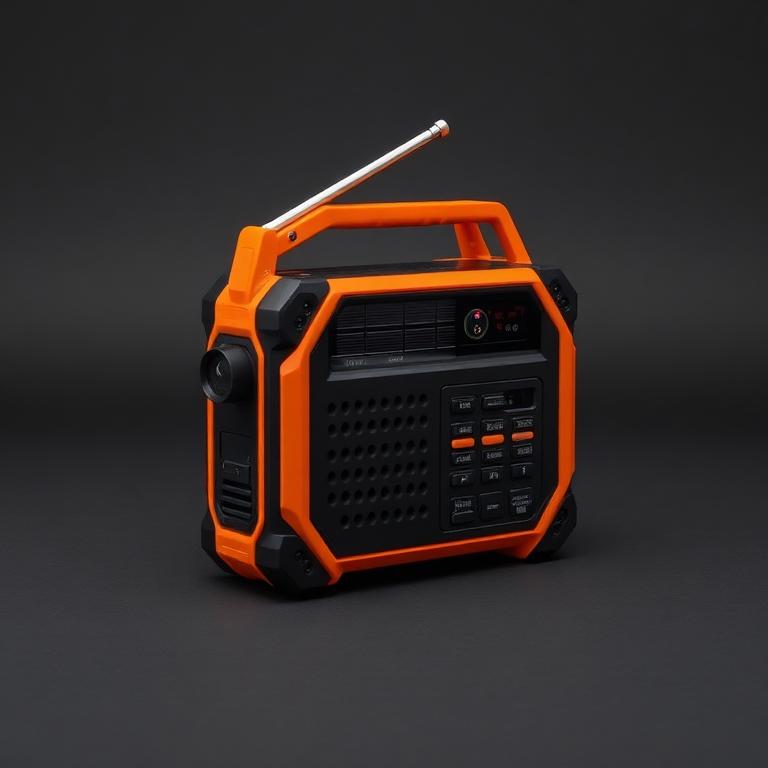
Solar & Hand-Crank Emergency Radio
Midland
Receives official broadcasts when the internet is down — a listening device, not a two-way radio.
AM/FM/NOAA weather radio with solar panel, hand crank, built-in flashlight and USB output for topping up a phone.
Anker 20,000mAh Powerbank
Anker
Keeps phones and USB-charged radios alive through a multi-day outage.
Enough for a week of phone and headlamp charging. Keep it warm in winter.
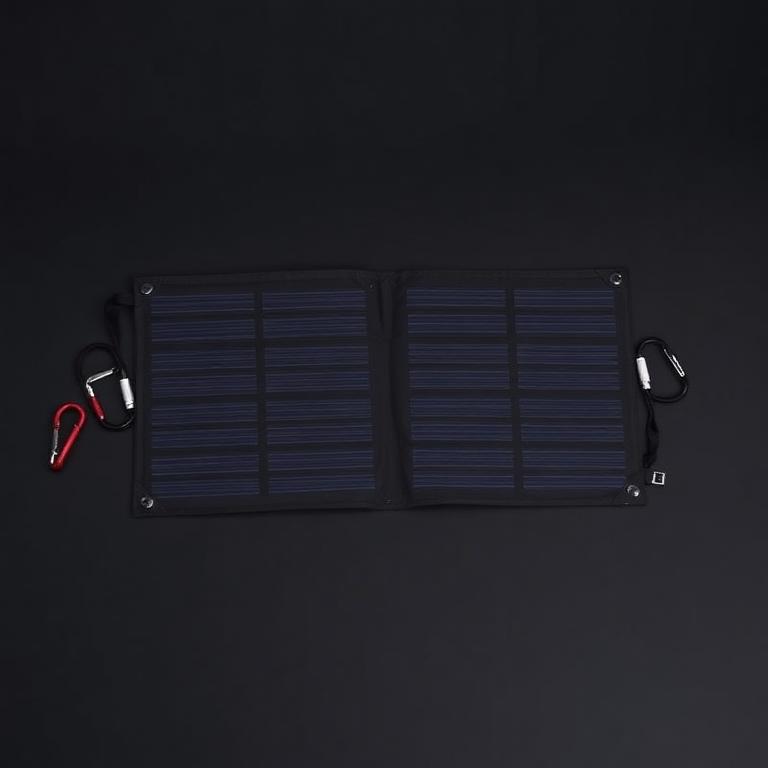
28W Folding Solar Charger
BigBlue
Recharges the power bank when the outage runs past a couple of days.
Straps to a pack and refills a powerbank in a day of sun. USB only, no controller needed.
65W USB-C PD Charger and Cables
Cables and charger for topping everything up before and between outages.
Charges powerbank, laptop and lights off one plug or one inverter socket.
Dry Bag Set
Keeps radios and the printed plan dry in a bag or car.
Keeps sleeping bag, spare clothes and electronics dry when the pack is not.
Some links are affiliate links: if you buy through them we earn a small commission at no extra cost to you. We don't run product tests, and a commission never decides what a guide recommends.
Rate this hack
Be the first to rate this hack
Share your experience
Have you tried this hack? Share your experience, results, tips or suggestions with other readers.
Community experiences
Loading…
More Emergency
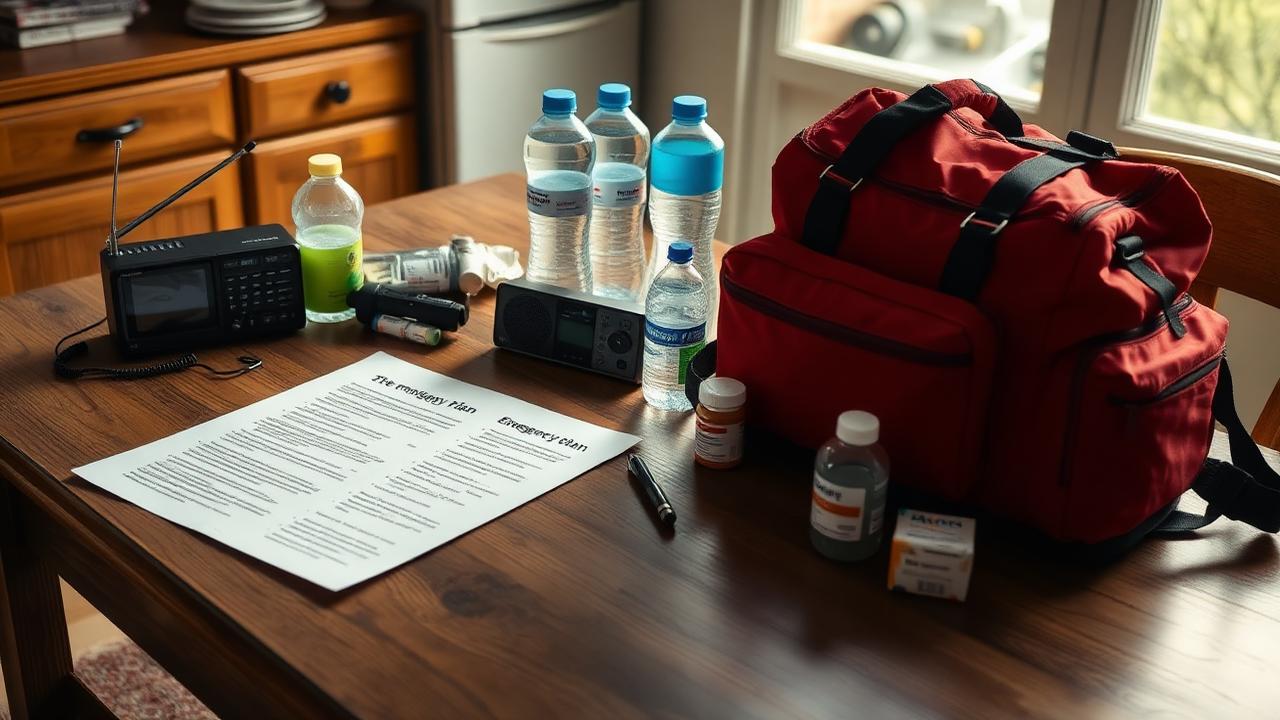
Building a 72-Hour Emergency Plan Your Family Will Actually Use
A one-page plan covering meeting points, contacts, roles and supplies — the boring document that makes every other preparation work.
8 min read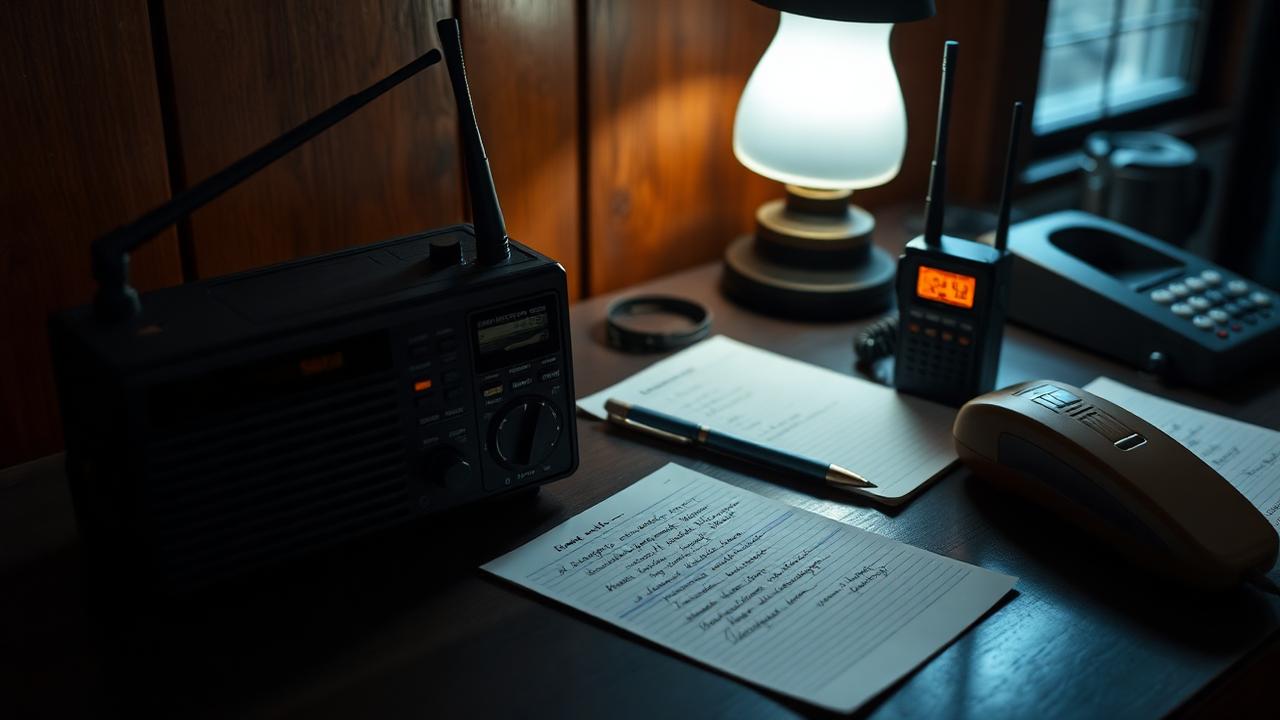
Staying in Contact When Networks Fail
Radio, SMS, out-of-area contacts and low-tech signals — a layered plan for staying in touch when the mobile network is congested or gone.
7 min read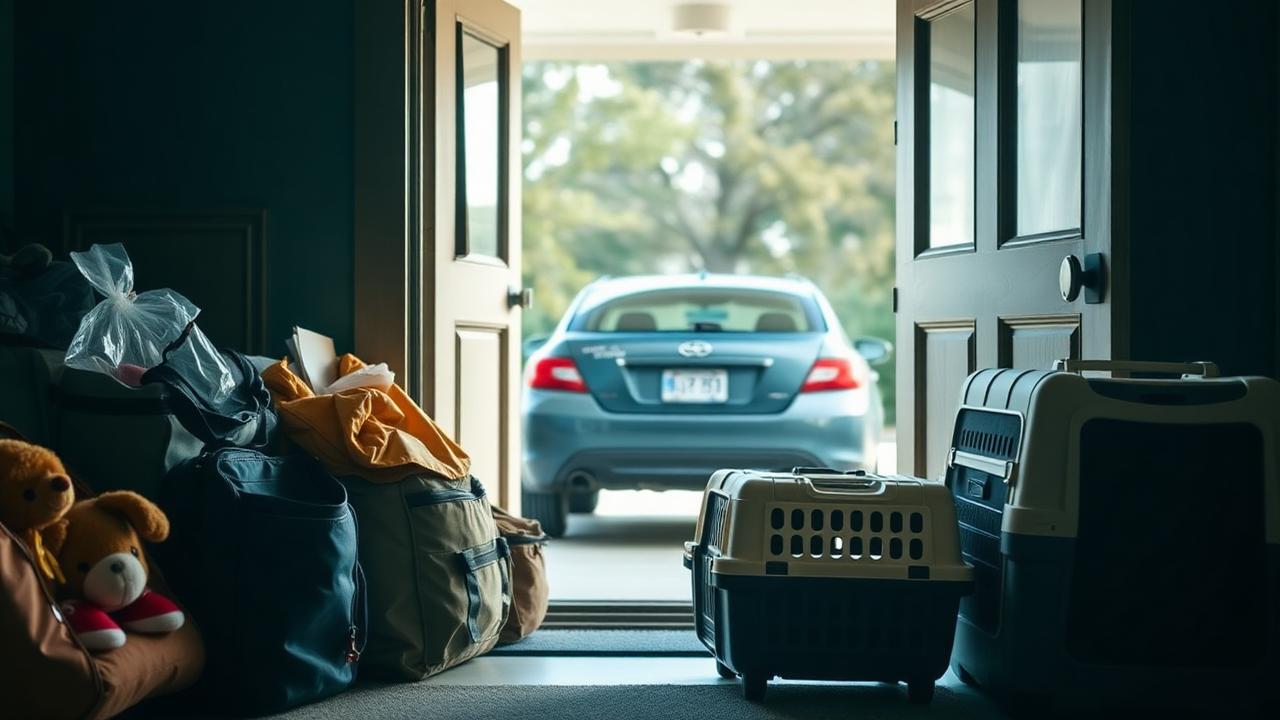
Evacuating in 15 Minutes: The Grab List
A printed, prioritised list that gets your family, documents, medication and pets out of the door without a single decision made in panic.
7 min read