Rainwater Harvesting From a Single Tarp
Rainwater harvesting from a single tarp: how much water a 3x3 tarp collects, how to funnel and store it cleanly, and how to make it safe to drink.
How it works, step by step
Pitch the tarp with a deliberate
Pitch the tarp with a deliberate low point. Angle one corner or edge lower than the rest so every drop of rain running across the surface is funnelled to a single exit point rather than dripping off evenly all along one edge.
Quick facts
What problem this solves
A single tarp pitched with a low point turns rain into a funnel. It is one of the fastest ways to top up water storage in a downpour without any purpose-built gear, and it scales - a 3x3 metre tarp catches meaningfully more than a bucket left in the open because the whole sloped surface drains to one spot.
When it's the right call
Use tarp harvesting when it's actively raining or forecast to rain and you already have a tarp up for shelter. It's most useful topping up apartment water storage or supplementing a 72-hour emergency plan during a winter storm power outage when mains supply is unreliable. It is not a primary water source you should plan a whole strategy around, since it depends entirely on rain falling when you need it.
How to rig it
- 01
Pitch the tarp with a deliberate low point. Angle one corner or edge lower than the rest so every drop of rain running across the surface is funnelled to a single exit point rather than dripping off evenly all along one edge.
- 02
Stake and tension the high edges first. A taut tarp sheds water fast and quietly; a sagging one pools water, stresses the fabric, and can dump its whole load in one go when the pool finally overflows.
- 03
Fit a spout at the low point. A short length of hose, a rolled corner pinned into a funnel shape, or a piece of guttering clipped to the hem all work - the goal is to concentrate the flow into a narrow stream you can aim.
- 04
Position your container directly under the spout. Raise it on a rock or crate if you can, so early run-off doesn't wash grit back into the tarp's runoff channel.
- 05
Let the first minute of rain run to waste. This first flush carries dust, bird droppings, pollen and anything that settled on the tarp since it was last used, and diverting it away noticeably improves what follows.
- 06
Cover the container between showers. An open container collects insects, leaves and airborne dust that undo the benefit of the first-flush step.
How much you actually get
A 3x3 metre tarp has roughly 9 square metres of harvesting area. In light-to-moderate rain that can realistically deliver tens of litres per hour, and a genuinely heavy downpour can fill several jerry cans faster than most people expect. The number swings hard with rainfall intensity, so treat any figure as a rough order of magnitude, not a promise.
Making it safe to drink
Rainwater collected this way is not automatically clean. It has run across tarp fabric that may carry dust, bird droppings, mould spores or residue from storage and transport, and open collection means airborne contamination throughout. Treat all tarp-caught rainwater the same way you would treat any untested water source: filter out visible particles, then disinfect by a rolling boil for at least one minute, or with a suitable chemical treatment, before drinking. For deeper background on disinfection options and their limits, see emergency water purification.
Common mistakes
A slack tarp is the biggest one - even a small sag turns your neat single-point harvesting into an unpredictable series of drips off multiple edges. Reusing a tarp that was recently used as a groundsheet or has been sitting in vehicle exhaust fumes is another; anything the tarp has touched can end up in your water. Leaving a full container uncovered overnight invites mosquitoes and airborne debris, undoing the first-flush effort.
When this isn't enough
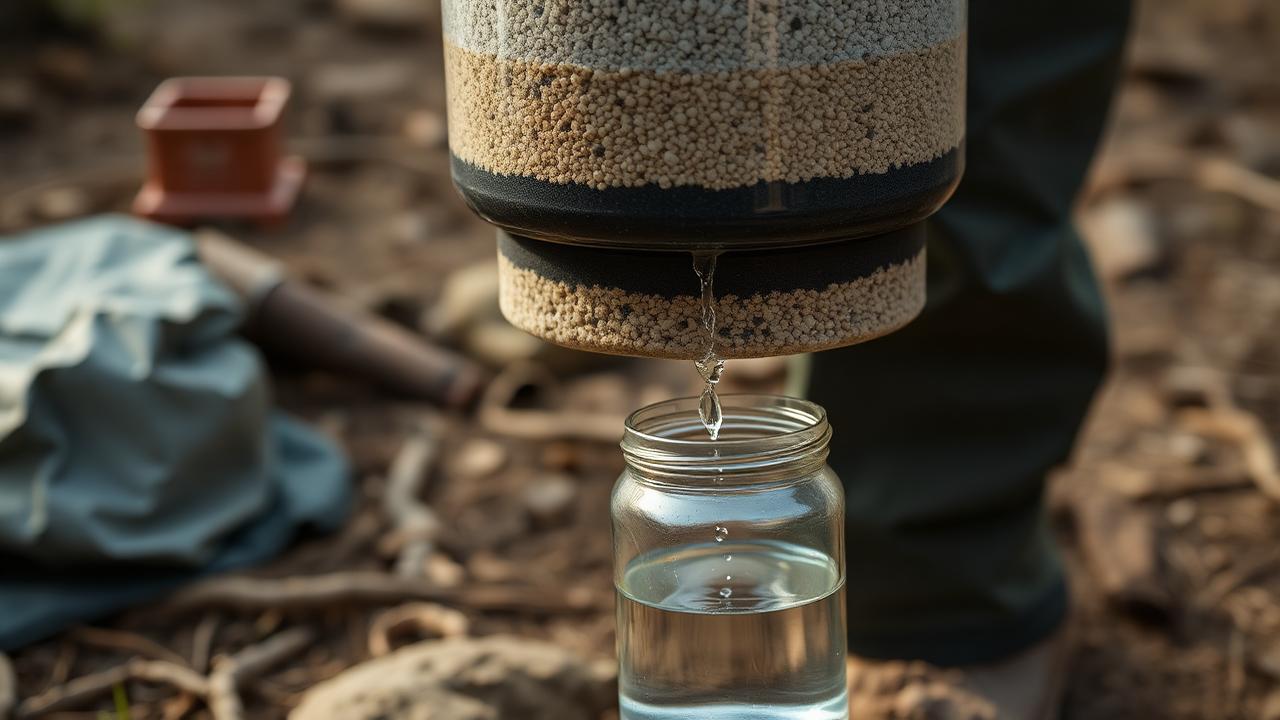
If it isn't raining, this method gives you nothing, so it should never be your only planned water source. It also won't help with volume during a drought or in an arid climate where genuine rainfall is rare. Pair it with stored water and a proper filtration or purification plan such as a three-stage gravity water filter so you aren't dependent on weather.
Sources and further reading
- US CDC, making water safe in an emergency: https://www.cdc.gov/healthywater/emergency/making-water-safe.html
- WHO, drinking water: https://www.who.int/health-topics/drinking-water
- ready.gov, water preparedness: https://www.ready.gov/
Rate this hack
Be the first to rate this hack
Share your experience
Have you tried this hack? Share your experience, results, tips or suggestions with other readers.
Community experiences
Loading…